HOLISTIC • Acupuncture • Ayurveda
A Holistic Approach to Glaucoma Care
Learn how Netra Restoration Therapy (NRT) complements conventional glaucoma care through an integrative, science-informed approach focused on comprehensive eye health.
GET STARTEDKnow the Facts
Understanding Glaucoma Goes Beyond Eye Pressure
Research continues to explore how factors such as inflammation, blood flow, oxidative stress, and neuroprotection may play a role in understanding glaucoma. Netra Restoration Therapy (NRT) is designed to complement conventional glaucoma care through an integrative, science-informed approach.
Learn how an integrative approach may complement conventional glaucoma care.
GET STARTEDDid You Know?
Research continues to expand our understanding of glaucoma, showing that factors beyond eye pressure may also play an important role in the condition.
Approximately 40% of people diagnosed with glaucoma may have normal eye pressure, a condition known as Normal Tension Glaucoma (NTG). This highlights the importance of taking a comprehensive approach to understanding glaucoma.
Download our free brochure to learn more about the latest glaucoma research, Netra Restoration Therapy (NRT), and our integrative approach to glaucoma care.
Netra
Restoration
Therapy
What Is NRT?
Netra Restoration Therapy (NRT) is an integrative approach that combines acupuncture, herbal medicine, and advanced clinical evaluation to complement conventional glaucoma care. Developed around current scientific understanding, NRT focuses on providing personalized, holistic support for overall eye health.
The approach is based on multiple areas of glaucoma research and is designed to support a comprehensive understanding of factors associated with eye health and optic nerve function.
- Neuroprotection
- Neurotrophic Support
- Healthy Ocular Blood Flow
- Inflammation Support
- Oxidative Stress Support
- Cellular Health
- Cytokine Balance
- Neural Function Support
- Antioxidant Support

Comprehensive Glaucoma Care
NRT is designed to complement your conventional glaucoma care through a personalized, integrative approach focused on overall eye health.

Integrative Eye Care Evaluation
Every treatment plan begins with advanced integrative and holistic diagnostics and a personalized evaluation tailored to each patient's needs.

Science-Informed Care
NRT is developed around current scientific understanding and an integrative approach to glaucoma care.

Personalized Treatment Planning
Treatment recommendations are tailored following a detailed clinical evaluation and discussion with our experienced team.

Holistic Eye Care
Our integrative approach combines holistic therapies with conventional glaucoma care to support overall eye health.

Non-Surgical Approach
NRT is designed as a non-surgical approach that complements conventional glaucoma care through personalized holistic clinical guidance.
Every patient's experience is unique. Treatment recommendations are based on an individual integrative and holistic clinical evaluation and professional guidance.
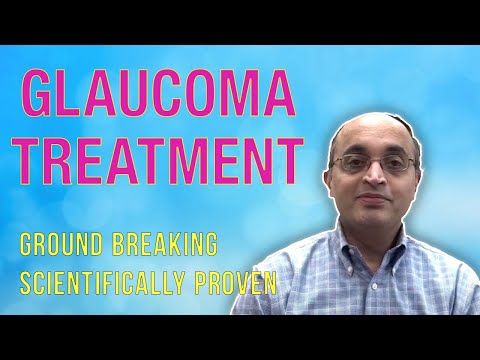
Patient Experience: Glaucoma & High Myopia
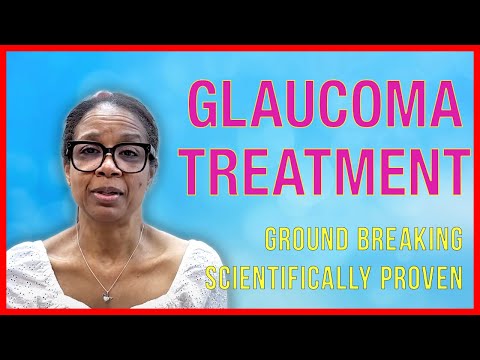
Patient Experience: Glaucoma & Optic Atrophy
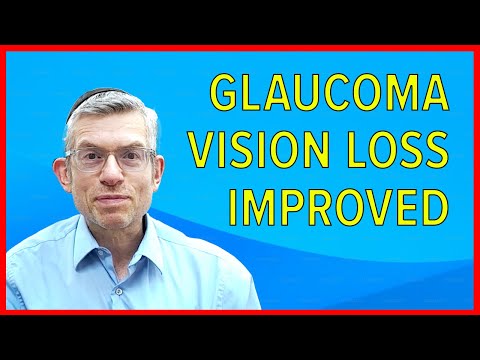
Patient Experience: Glaucoma & Myopia
Patient Experience: Glaucoma & High Myopia

The team took the time to explain everything clearly, answer my questions, and create a personalized approach that gave me greater confidence in understanding my eye health.
"From my first consultation through follow-up appointments, I appreciated the professionalism, thorough evaluations, and compassionate care. I felt informed throughout the process and valued the time the team spent discussing my options."
Martin

I appreciated the time the team spent understanding my concerns and explaining every step of the process. I felt supported and well informed throughout my care.
"The consultations were thorough, the approach was personalized, and the team answered all of my questions with patience and professionalism. It gave me confidence in the care I received and the decisions I made moving forward."
Sarang
Know The Facts
Research Continues to Expand Our Understanding of Glaucoma
Scientific research suggests that glaucoma involves more than elevated eye pressure alone. Factors such as ocular blood flow, oxidative stress, inflammation, mitochondrial function, and neurotrophic support are all areas of ongoing research that continue to improve our understanding of the condition.
GET STARTED20/20
Comprehensive Care Begins With A Thorough Understanding Of Your Eye Health.
Every patient begins with a comprehensive integrative and holistic clinical evaluation and advanced base line testing. This helps our team better understand each individual's condition and develop a personalized approach to care.
Netra Restoration Therapy (NRT) combines advanced clinical evaluation with an integrative, science-informed approach designed to complement conventional glaucoma care.
No. Netra Restoration Therapy is intended to complement—not replace—the treatment plan prescribed by your ophthalmologist. Patients should continue all recommended medications, injections, procedures, monitoring, and follow-up appointments while receiving NRT.
Netra Restoration Therapy (NRT) is an integrative approach that incorporates Traditional Chinese Medicine (TCM), including acupuncture and herbal medicine, alongside conventional glaucoma care. Insurance coverage varies by provider, and many complementary therapies are not included in standard insurance plans.
Lowering intraocular pressure remains an important part of conventional glaucoma management. At the same time, research continues to explore additional factors such as ocular blood flow, oxidative stress, inflammation, and neuroprotection to better understand the condition.
Glaucoma is a chronic eye condition that requires ongoing monitoring and management. Netra Restoration Therapy (NRT) is designed to complement conventional glaucoma care as part of a personalized, integrative approach. Treatment recommendations are based on an individual clinical evaluation.
No. Netra Restoration Therapy (NRT) is not intended to replace conventional glaucoma treatment. Patients should continue following the advice of their ophthalmologist and discuss any treatment decisions with their healthcare provider.
NRT is based on current scientific understanding that glaucoma is a complex condition. The approach combines comprehensive clinical evaluation with complementary therapies to support personalized glaucoma care alongside conventional treatment.
NRT incorporates Traditional Chinese Medicine (TCM), including acupuncture and herbal medicine. Individual complementary therapies may be regulated differently than pharmaceutical products, and patients are encouraged to discuss any questions with their healthcare provider.
Glaucoma progression varies from person to person. Regular eye examinations, ongoing monitoring, and following the treatment plan recommended by your eye care professional are important parts of long-term glaucoma management.
Family history is one of several factors associated with glaucoma. People with a close family history of glaucoma may benefit from discussing appropriate eye examination schedules with their eye care professional.
Reduced Neuroprotection and Neurotrophins
Obstructed Axonal Transport of BDNF and Its Receptor TrkB in Experimental Glaucoma – Pease et al., 2000
Summary: In the study, elevated intraocular pressure in glaucoma models blocked retrograde transport of neurotrophins like BDNF to retinal ganglion cells, contributing to their degeneration. This supports neurotrophic-based therapies, as supplying or restoring neurotrophic support may help protect retinal neurons and complement standard IOP-lowering treatments.
Glaucoma Pathogenesis and Neurotrophins: Focus on the Molecular and Genetic Basis for Therapeutic Prospects – Chitranshi et al., 2018
Summary: This review describes glaucoma as a neurodegenerative disease where vision loss can progress even with “normal” IOP. It highlights that IOP-related stress can impair axonal transport and deprive retinal ganglion cells of neurotrophins (e.g., NGF/BDNF), promoting apoptosis. NRT conceptually fits by restoring neurotrophic support as complementary neuroprotection alongside.
Tackling Glaucoma from within the Brain: An Unfortunate Interplay of BDNF and TrkB – Dekeyster et al., 2015
Summary: In the article, glaucoma-related axonal transport disruption reduces delivery of neurotrophins like BDNF to retinal ganglion cells, triggering degeneration. Neurotrophic-based approaches (e.g., supplementing or enhancing BDNF signaling) aim to restore this support and protect neurons, offering a neuroprotective strategy that complements traditional IOP-lowering treatments to help preserve vision.
Reduced Blood Flow / Vascular Dysregulation / Vascular Instability
Role of ocular blood flow in normal tension glaucoma – Wu et al., 2022
Summary: In this study on ocular blood flow in normal-tension glaucoma, impaired blood flow and vascular dysregulation contribute to oxidative stress and retinal ganglion cell damage independent of IOP. Improving perfusion may help preserve neurotrophin delivery and neuronal health, linking vascular support to neuroprotective strategies like NRT in glaucoma management.
Treatment of Glaucoma Patients with Flammer Syndrome – Konieczka et al., 2021
Summary: This study discusses how vascular dysregulation and impaired ocular blood flow contribute to retinal ganglion cell damage in glaucoma, especially in normal-tension glaucoma. By highlighting factors that reduce delivery of essential survival signals, it supports the rationale for neurotrophic-based therapies like NRT to enhance neuronal resilience and protect ganglion cells in glaucoma beyond lowering IOP.
Vascular dysregulation in glaucoma – Zhou, Sabel et al., 2023
Summary: This study found that POAG eyes had narrower retinal arteries and veins, yet flicker-induced neurovascular coupling (dilation response) remained normal. They interpret this as chronic baseline vasoconstriction that restricts metabolic supply, contributing to “silent” or dying retinal neurons despite controlled IOP. NRT aligns as an adjunct by supporting neuronal survival and resilience when blood-flow–related stress persists.
Nocturnal Hypotension (Night-Time Low Blood Pressure)
Nocturnal systemic hypotension increases the risk of glaucoma progression – Charlson et al., 2014
Summary: This study followed normal-tension glaucoma patients and found that nocturnal systemic hypotension was linked to greater visual field progression over 12 months, suggesting optic nerve damage can worsen from insufficient nighttime perfusion even when IOP is “good.” This supports NRT as an adjunct by strengthening neuronal resilience/neurotrophic support amid vascular stress.
Long-Term Clinical Course of Normal-Tension Glaucoma: 20 Years of Experience – Jin et al., 2017
Summary: This 20-year NTG cohort study found that visual fields still worsened in some patients despite medical IOP-lowering (average progression about −0.28 dB/year). IOP reduction rate and ocular perfusion pressure were key factors linked to progression, highlighting non-IOP drivers. NRT fits as an adjunct by supporting retinal ganglion cell survival under perfusion-related stress.
Twenty-Four Hour Blood Pressure Pattern in Patients With Normal Tension Glaucoma in the Habitual Position – Joe et al., 2009
Summary: This study monitored 24-hour blood pressure in untreated normal-tension glaucoma and found that greater nocturnal BP dipping (lower nighttime DBP/MAP) was significantly associated with worse structural optic nerve/RNFL damage (lower TSNIT, higher NFI). This supports NRT as an adjunct by boosting neuronal resilience/neurotrophic support when optic nerve perfusion drops at night.
Ocular Inflammation / Immune Activation
Neuroinflammation in Primary Open-Angle Glaucoma – Vernazza et al., 2020
Summary: This study review explains that primary open-angle glaucoma involves neuroinflammation: activated microglia/astrocytes, NF-κB signaling, and pro-inflammatory cytokines can amplify retinal ganglion cell stress and death, often beyond what IOP control alone prevents. NRT is relevant as a complementary strategy aimed at supporting ganglion-cell survival/neurotrophic signaling despite ongoing inflammatory injury.
Molecular regulation of neuroinflammation in glaucoma – Tezel, 2022
Summary: This study reviews how neuroinflammation drives glaucomatous retinal ganglion cell loss: stressed neurons activate microglia/astrocytes, inflammatory mediators amplify damage, and mitochondrial dysfunction and inflammation reinforce each other. This supports NRT as an adjunct by providing neurotrophic/neuroprotective support to help neurons survive despite ongoing inflammatory stress beyond IOP control.
The role of microglia in glaucoma - trigger and potential target – Chen et al., 2025
Summary: This review show microglial activation (triggered by biomechanical stress, metabolic disturbance, and inflammatory signals) can shift the retina/optic nerve toward chronic neuroinflammation, accelerating retinal ganglion cell loss independent of IOP. This supports NRT as complementary care by emphasizing neurotrophic/neuroprotective support to strengthen RGC survival despite ongoing immune-glial stress.
Oxidative Stress
Current trends in targeting the oxidative stress in glaucoma – Iorga et al., 2024
Summary: This review explains that oxidative stress (ROS) contributes to glaucoma by damaging the trabecular meshwork (raising IOP) and stressing the optic nerve/retinal ganglion cells, with inflammatory pathways also involved. It notes ongoing clinical interest in antioxidant strategies. NRT aligns by providing neurotrophic/neuroprotective support to help RGCs resist oxidative injury alongside IOP care.
Role of reactive oxygen species and oxidative stress in the pathomechanism of glaucoma – Chan et al., 2025
Summary: This review explains that reactive oxygen species (ROS) and oxidative stress contribute to glaucoma through mechanical, vascular (ischemia), and immunologic (glial/inflammasome) pathways, promoting retinal ganglion cell injury and death. It supports NRT as complementary care by emphasizing neuroprotective/neurotrophic support to help neurons withstand oxidative/inflammatory stress beyond IOP lowering.
Identification and validation of oxidative stress signature genes in the trabecular meshwork of glaucoma – Xu et al., 2025
Summary: This paper used bioinformatics on trabecular meshwork datasets to identify oxidative-stress genes linked to glaucoma and enriched inflammatory pathways (IL-17, TNF, NF-κB). It highlights oxidative/inflammatory TM dysfunction as a driver of disease beyond pressure alone. NRT is relevant as adjunct neuroprotection/neurotrophic support against oxidative stress–related neuronal vulnerability.
Ferroptosis
Inhibition of ferroptosis promotes retina ganglion cell survival in experimental optic neuropathies – Guo et al., 2022
Summary: This study show that ferroptosis, iron-driven lipid peroxidation with mitochondrial changes, is a major cause of retinal ganglion cell (RGC) death in experimental glaucoma and optic nerve crush. The ferroptosis inhibitor ferrostatin-1 improved RGC survival and retinal function, supporting NRT’s role as adjunct neuroprotection against oxidative/iron-mediated injury.
Ferroptosis Contributes to Retinal Ganglion Cell Loss in GLAST Knockout Mouse Model of Normal Tension Glaucoma – Ye et al., 2025
Summary: This study shows that ferroptosis (iron-driven lipid peroxidation) contributes to retinal ganglion cell (RGC) loss and retinal damage in the GLAST−/− normal-tension glaucoma model. Treating with the ferroptosis inhibitor ferrostatin-1 reduced oxidative injury and protected visual function, supporting NRT as adjunct neuroprotection beyond IOP control.
Ferroptosis and retinal ganglion cell death in glaucoma: Mechanisms and therapeutic approaches – Qin et al., 2025
Summary: This review shows ferroptosis as an important mechanism of retinal ganglion cell loss in glaucoma, linking it to GSH depletion, mitochondrial dysfunction, iron overload, and lipid peroxidation/oxidative stress. They highlight therapeutic strategies (e.g., antioxidants, iron chelation, ferroptosis inhibitors). This supports NRT as adjunct neuroprotection beyond IOP lowering.
Copyright © 2026 | Netra Eye Institute | Privacy Policy | Terms & Conditions